“ We have developed the decarbonization plan for more than 50 percent of the portfolio under management, with the objective to align the properties under the Paris Agreement decarbonization pathway. All our new products under construction target the alignment with at least one of the European environmental taxonomy objectives, qualifying this activity as sustainable investment. ”
Stefano Corbella
Sustainability Officer, Sustainable Innovation Committee Secretary
COIMA Group’s activities cover all phases of a real estate project, involving various types of stakeholders. In the initial investment phase, the key players are investors and banks, essential for capital raising and financing operations. In development and urban regeneration projects, architects, designers, and general contractors are involved. A central element is also the collaborative and consultative relationship with institutions and local communities. For income-generating properties or completed projects, the main stakeholders are tenants, and for properties managed by COIMA REM, service providers also play a significant role.
The materiality analysis helps identify key risks and opportunities, improving transparency and communication.
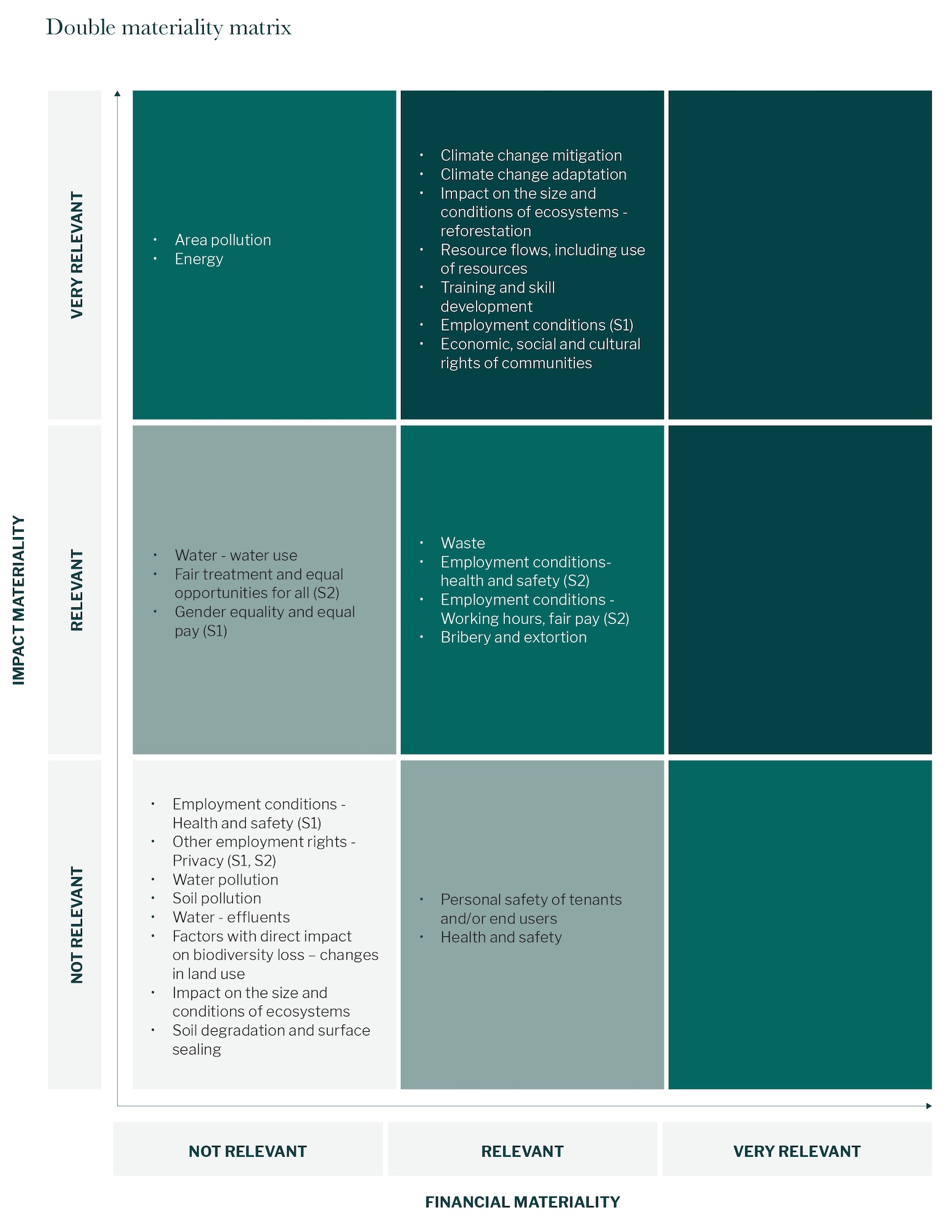
This reflection is also encouraged by the European regulatory framework. The new CSRD Directive requires an approach to materiality based on two dimensions:
- Impact materiality: assesses the positive and negative, actual or potential impacts of the company’s operations and policies on people and the environment, following an inside-out perspective.
- Financial materiality: assesses the risks and opportunities that could reasonably have a significant influence on the company, generating financial effects, following an outside-in perspective.
COIMA has voluntarily carried out a preliminary double materiality assessment in accordance with the European Sustainability Reporting Standards (ESRS).
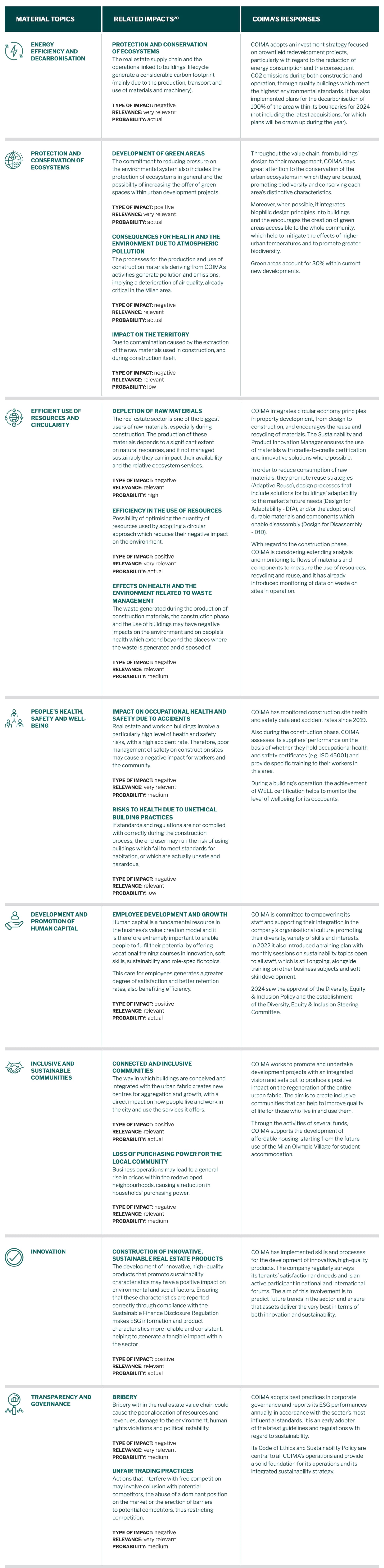
It should be noted that, in order to comply with the GRI Standards, COIMA carried out the materiality analysis in accordance with their requirements, and the material topics that emerged are listed below.