Every attractive city sooner or later faces a decisive question: who will still be able to afford to live there? Not simply visit it or commute there for work, but build a stable everyday life based on relationships, services, proximity and a sense of belonging. In Milan, this question has become particularly urgent in light of the urban transformation the city has undergone over the past twenty years.
The city has strengthened its role as Italy’s economic, cultural and productive capital,attracting investment, talent, students, businesses and tourists. At the same time,however, the lack of adequate public planning, coupled with rising property values and rents, has made access to housing increasingly difficult for a growing share of thepopulation: not only the most vulnerable groups, but also the middle class, young professionals, families and many of the essential workers who keep the city running on a daily basis.
The figures from the Third OCA Report – Osservatorio Casa Abbordabile, presented in
April 2026, confirm this trend. In 2024, residential property prices in Milan rose by 8.5%
and rents by 6.8%, while average wages increased by just 4.2%. Compared with 2015,
property prices have risen by 60% and rents by 55%. The gap is even more pronounced
for blue-collar and office workers, who account for more than 85% of private-sector
employees in the city.
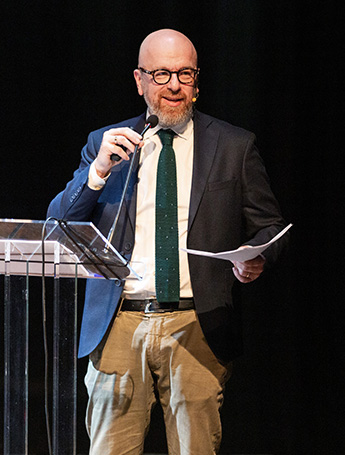
It is against this backdrop that social housing has once again moved to the centre of the urban debate. Not as a marginal response, but as part of a broader strategy to build cities that are more balanced, inclusive and competitive. We discussed the Milan case, the comparison with Rome and the international models that could provide inspiration with Alessandro Maggioni, Chairman of the Board of Directors of the Consorzio Cooperative Lavoratori di Milano (CCL).
“If there is one issue that has now become a shared concern,” Maggioni observes, “it is the
fact that major metropolitan areas are experiencing an unsustainable housing crisis.”
This pressure affects not only the right to housing, but the overall resilience of the city: its
competitiveness, services, social cohesion and the risk of increasingly divided urban
environments.
For Maggioni, the key point is that rising property values cannot in themselves be regarded
as a positive indicator: “There is a consolidation of property rents and, on the other side,
increasing pressure on labour,” he points out. “If a city relies solely on property rents, it
cannot thrive, and perhaps it cannot even survive.”
This divide takes different forms in Milan and Rome. In the Lombard capital, the main
issue is the growing gap between incomes and housing costs within a dynamic but
increasingly selective market. In Rome, by contrast, the issue is intertwined with a broader
urban dimension, including the city’s institutional role, tourism pressure and a different
historical relationship between politics, public land and subsidised housing. “Tourism
should also be regarded as a function that competes with residential use,” Maggioni
observes, highlighting how the growth of temporary uses and high-spending demand can
affect the everyday balance of residential life.
According to Maggioni, however, Milan and Rome should not be viewed through a competitive lens, but rather as part of a broader national system. Rome can look to Milan to understand its ability to activate urban transformations, while at the same time avoiding some of its mistakes. Milan, in turn, can look to the scale of Rome to rethink its relationship with the metropolitan area and increasingly envision itself as a city-region. Maggioni describes this perspective as one of “soft hegemony”, in which surrounding areas are not treated as destinations for the less desirable functions of the central city, but as an integral part of a broader and more balanced urban system.
From this perspective, social housing is not simply a way of providing homes at controlled rents or prices, but an approach to urban planning and design. It means deciding where to build, according to which rules, with what social and functional mix, and in what relationship with the rest of the city. “Urban planning is not a financial or legal discipline, but a discipline of urban design,” Maggioni points out. “Housing projects, therefore, must avoid remaining isolated interventions and instead contribute to creating areas that are ‘permeable, open and accessible’.”
From this standpoint, Scalo Romana represents a significant testing ground. COIMA and the Consorzio Cooperative Lavoratori di Milano (CCL) have launched a partnership focused on the development of subsidised and social housing projects, with an initial project at the former Porta Romana railway yard – where the Milan-Cortina 2026 Olympic Village was built – which provides for 320 residential units as part of the wider regeneration of the area.
According to Maggioni, “the value of the agreement lies in its ability to bring together identities that are often perceived as distant: on the one hand, the cooperative sector; on the other, an institutional real estate operator.” In Scalo Romana, for example, the conventional subsidised housing component, priced at €3,800 per square metre, introduces a principle of affordability while also generating what Maggioni defines as a “share of urban equity”: part of the value created by the development is reinvested in public and affordable housing. “It is a model that I summarise as follows: measure, regulate, extract, redistribute.”
The same approach could also offer valuable insights for Rome, where the redevelopment of the former Guido Reni Barracks represents an opportunity to test the scalability of some of these principles in a profoundly different context. The site, in the Flaminio district, is set to undergo a transformation integrating residential units, social housing, commercial spaces and hospitality facilities, alongside the future public Museum of Science.
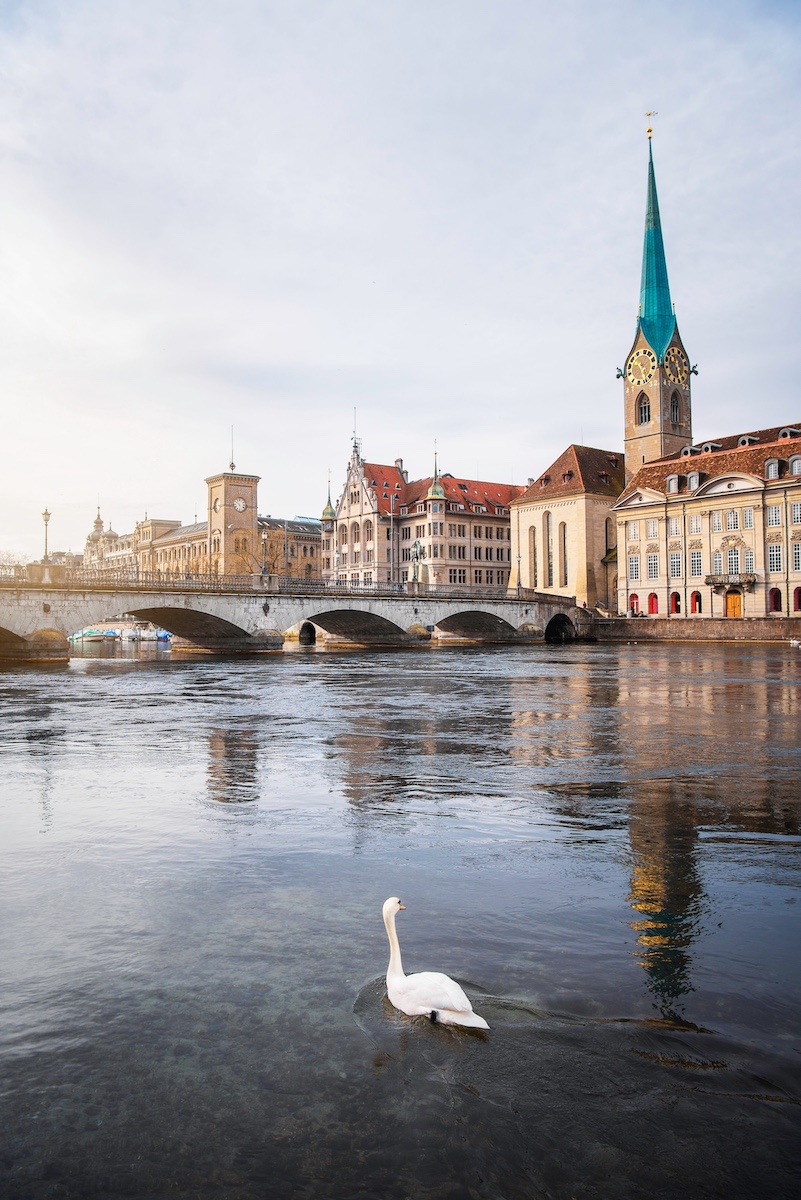
Looking abroad, Maggioni distinguishes between models to admire and models that can realistically be transferred. Vienna remains a historic benchmark, but is difficult to replicate in Italy because of its institutional structure and strong public-sector tradition. From his perspective, the case of Zurich is more interesting. There, housing cooperatives have managed to innovate in one of the world’s most expensive cities, developing new neighbourhoods while preserving cooperative and community-based principles.
The Italian challenge lies precisely in this ability to translate rather than simply replicate: looking to international models without copying them, and developing tools that are consistent with the specific characteristics of our cities. Because a city does not thrive on attractiveness, investment and new functions alone. It also depends on the tangible possibility of being inhabited by the people who keep it moving every day. As Maggioni reminds us, “there are jobs that cannot be done remotely.” And cities, he concludes, “are built on bricks, spaces and, above all, people.”